Post By: Vito Russo
This past week (06/01/26) kicked off a joint effort between Patapsco Heritage Greenway and the University of Maryland. Under the direction of Dr. Kyla Cools, three students (and many more volunteers) will learn archaeological field methods over the next few weeks at Hockley House, an 18th century structure associated with the former Hockley iron forge complex on the Patapsco River.
Hockley has seen various uses throughout its lifetime, being built around 1763-64 to expand the Baltimore Company’s activities along the Patapsco River. After forge activities ceased at the turn of the century, the property transitioned through a variety of phases, from nail-making and milling to manufacturing in the late 19th and early 20th century. Hockley was acquired by the State of Maryland in the 1960s, and has been under state ownership since. Though a variety of structures once occupied the site, only the old forge master’s home still stands. This will be the first in a series of blogs covering the team’s experience at Hockley over the coming weeks, with topics ranging from explaining our methodology to detailing the site’s storied history and discussing our research questions during the process.
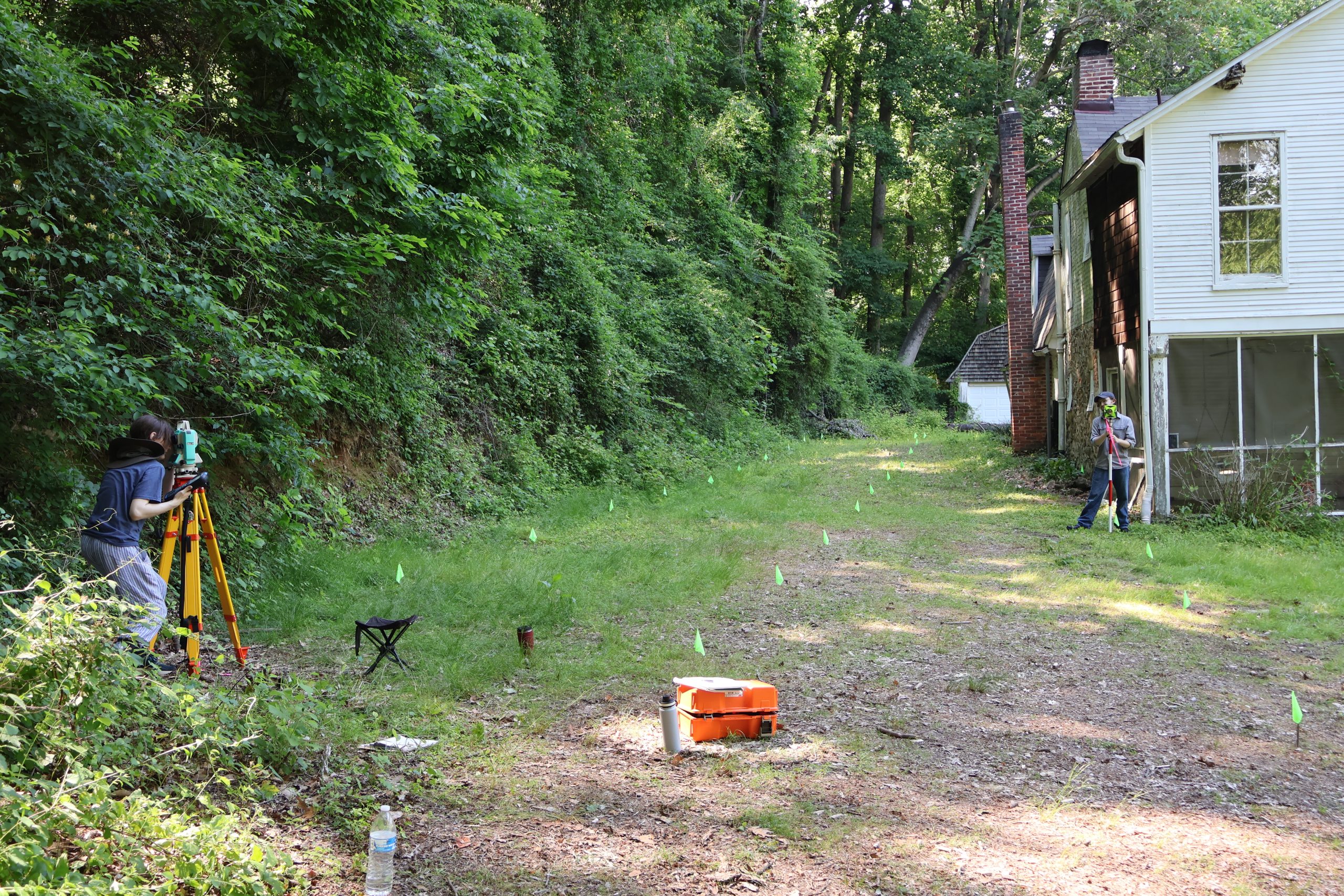
This week, the team began with establishing a grid to denote our boundaries for walk-over survey and shovel test pits, which are small-scale excavations that help us gain familiarity with soil deposition in the area, and identify areas with high potential for recovering material culture. This involved measuring out our grid points and then capturing precise coordinates using a total station, an electronic geospatial survey instrument. While we aim to cover broader areas than the immediate vicinity of the forge master’s dwelling, we are beginning with the west side of the structure. Previous research has identified the northwest end of the forge master’s dwelling would have been where a bake-oven was located during Hockley’s early occupation in the 18th century, so we hope to find evidence of that through our initial shovel test pits.
Because this is a public archaeology project, we aim to work alongside community members and take the time required to investigate a site with such a long history. To gain a broader familiarity with the area, the team visited community organizations at the Elkridge Assembly Rooms and the Brumbaugh House Museum, two local historic locations. The Elkridge Assembly Rooms were built during the aftermath of the Civil War as a place of healing for a divided community. They housed plays, dances and other community events. Today they still stand, maintained by members of the community. During our visit they housed local art, with a dedicated space in the building for people to sit together and create. We also visited the Brumbaugh House Museum, where we learned about the history of Elkridge and the life of Dr. Benjamin Bruce Brumbaugh, a beloved local doctor who served the community for over 50 years. Brumbaugh was renowned for valuing his patients over profit; on the wall above one exhibit, a large compilation of photos shows generations of “Brumbaugh Babies” that he delivered throughout his career.
The team will officially break ground in week two, with community volunteers joining us later in the week! You can learn more about our team members below:
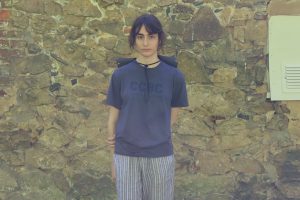
Olivia Wies is a senior at the University of Maryland. Originally from Cambridge, England, she moved to the United States in 2015. Olivia studies anthropology and Japanese, and was drawn to public archaeology because of its propensity for community involvement in the research process. She hopes our work at Hockley reveals remnants of the forge dwelling’s bake-oven!
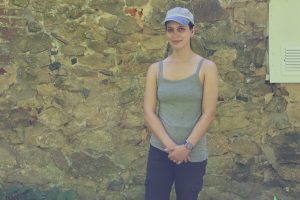
Alannah Rood is a senior at the University of Maryland, originally from Clifton, Virginia. Alannah became interested in archaeology after taking a university course in art history, and found further passion in zooarchaeology. In addition to learning field methods, she hopes our work at Hockley locates what would have been a summer kitchen!
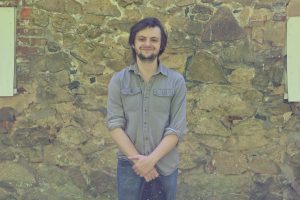
Vito Russo is a master’s student at the University of Maryland. Originally from Bethlehem, Pennsylvania, he studies applied anthropology with a specific interest in industrial history and archaeology. He hopes to learn more about the experience of laborers at Hockley, including where they may have potentially lived.
This project has been financed in part with State funds from the Maryland Historical Trust, an instrumentality of the State of Maryland. However, project contents or opinions do not necessarily reflect the views or policies of the Maryland Historical Trust.