Post by Alannah Rood
Zooarchaeology is the study of animal remains— including teeth, bones, and shells— recovered from archaeological contexts. By investigating these materials, archaeologists can better understand how people interacted with animals as food sources, raw materials, and parts of working landscapes. Zooarchaeological evidence can also reveal important cultural, social, and dietary aspects of the people who lived and worked at the Hockley site.
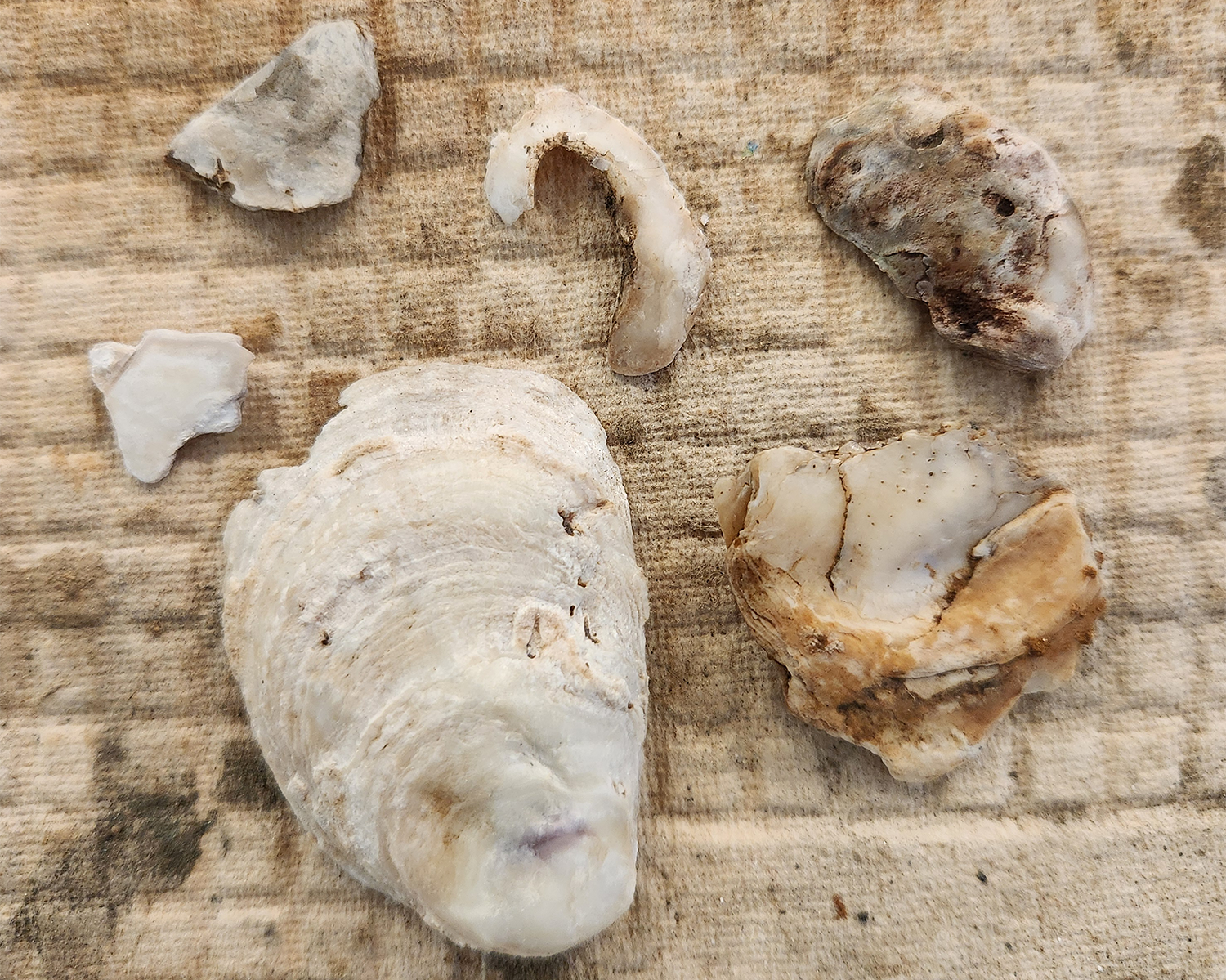
Our shovel test pits, or STPs, at Hockley have already revealed several interesting faunal remains, including numerous oyster shell fragments, pieces of small mammal long bones, and even a pig canine tooth.
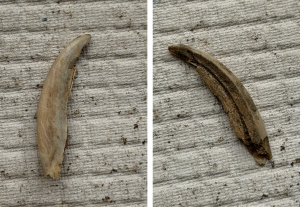
Pig canine found in STP B3 at Hockley House.
Careful analysis of these remains during cataloguing is essential for understanding the context in which the animals were used and deposited. This includes taphonomy, or the study of what happens to remains after death and burial, which helps archaeologists distinguish human activity from natural damage. Physical characteristics on the bone, such as cut marks, burning, or breakage patterns, can indicate human modification and use, including butchery, cooking, or marrow extraction. Tooth eruption and wear patterns, along with the presence or absence of fused physes (growth plates) in long bones or cranial sutures in the skull, can help estimate the age at which an animal was slaughtered. Even when these age estimates are broad, they can still help identify patterns in animal management, diet, and consumption. For example, the pig tooth found at Hockley is a permanent canine, suggesting that the individual was at least 8-12 months old at the time of slaughter.
The abundance of oyster shells found at Hockley is not especially surprising, given the site’s historic function as an iron forge. During the smelting of iron ore, flux is added to promote fluidity and help remove impurities, which form slag, from the molten metal. Although limestone was traditionally used as flux, regional context is especially important at Hockley, as it is at many colonial and early American ironworks along the East Coast. Oyster shells, which also contain the necessary calcium carbonate, were a plentiful and often more cost-effective alternative to crushed limestone. At the same time, context is key: oyster shell can represent food refuse, industrial material, or a combination of both.
While zooarchaeology is a valuable tool for reconstructing the daily lives of the people who lived and worked at Hockley, it is only one line of evidence. Flotation samples, which support archaeobotanical analysis, can indicate the presence of seeds, nutshells, charcoal, and other small plant remains in a sample. Likewise, ceramic assemblages can provide insight into foodways. The presence of more bowls or other hollowwares than plates at a site may suggest soups, strews, or other one-pot meals, especially when considered alongside faunal or botanical evidence. At sites associated with enslaved people and laborers, these patterns can help archaeologists ask broader questions about diet, labor, status, and cultural food traditions.
Taken together, these different lines of evidence allow even small finds from STPs to contribute to a fuller picture of everyday life at Hockley.
This project has been financed in part with State funds from the Maryland Historical Trust, an instrumentality of the State of Maryland. However, project contents or opinions do not necessarily reflect the views or policies of the Maryland Historical Trust.